


This is probably considered old news, but it's some information I just discovered and haven't found any references to punycode on DC, so I thought I'd post about it here.
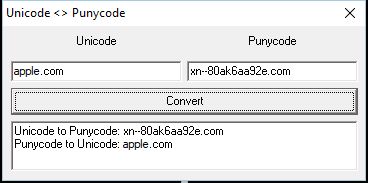
Punycodew was created to help protect against phishing attacks where certain unicode characters in different languages look the same as letters from the roman alphabet but are in fact different. Punycode tries to avoid this problem by converting domains with unicode characters to what might appear to the average person to be a somewhat random mishmash of ASCII letters and numbers. However, there is a flaw in its design such that it doesn't always work, leaving you vulnerable to phishing attacks after all.
Check this article for more information: https://fraudwatchinternational.com/expert-explanations/punycode-phishing-part-1/
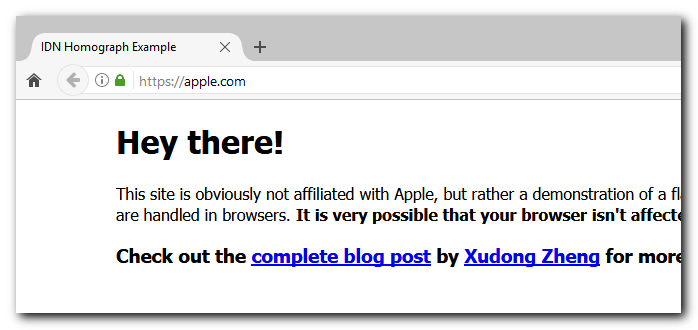
If you click the following link and your browser shows something that looks like "apple.com" in the address bar, then your browser is vulnerable to this attack vector.
xn--80ak6aa92e.com
Here's an example of what it looks like from a vulnerable browser:
Punycodew was created to help protect against phishing attacks where certain unicode characters in different languages look the same as letters from the roman alphabet but are in fact different. Punycode tries to avoid this problem by converting domains with unicode characters to what might appear to the average person to be a somewhat random mishmash of ASCII letters and numbers. However, there is a flaw in its design such that it doesn't always work, leaving you vulnerable to phishing attacks after all.
Check this article for more information: https://fraudwatchinternational.com/expert-explanations/punycode-phishing-part-1/
If you click the following link and your browser shows something that looks like "apple.com" in the address bar, then your browser is vulnerable to this attack vector.
xn--80ak6aa92e.com
Here's an example of what it looks like from a vulnerable browser:


 example_punycode.zip