
Looks awesome.
Re: Anyone here using a standing desk?
« Reply #100 on: November 14, 2017, 03:27 PM »


 Topic: Anyone here using a standing desk? (Read 114,108 times)


There are some changes, i.e. different keyboard,


I'll follow up once it's arrived and have had a chance to use it a bit.Have you got any feedback yet for those of us as might be interested, please?
Those [late 20th century open plan office studies] are fine for understanding individual perceptions, but aren’t so good at quantifying real behavioral responses and organizational performance outcomes from open offices. The gap between perceptions and real outcomes has now become the battleground for employees and employers on this issue.
Technology—in this case specifically, wearable technology—has enabled us to track individual or dyadic interactions at a really refined level. It’s not just “did you do this?” but “you did X, Y, and Z at this particular time with these other people.” If I was going to dive into researching open offices, I wanted to do it more empirically, tracking variables that were previously unfathomable to measure beyond proxies and guessing.
It depends on what you’re trying to achieve with open offices. My understanding, from speaking with real estate managers and architects, is companies’ conversations about the built environment tend to start with cost per square foot. If the question is how to lower costs, the answer is more people per square foot, and open offices will always have the upper hand on that dimension.
My hope is that this research throws a bucket of ice water on the idea that there’s no tradeoff—that you will naturally both save in real estate costs and get more collaboration from this kind of design.
His colleague then piped up and pointed out that all of the “noise” (as an indication of interactions) actually comes from behind the closed doors of the separate, team-based spaces. That should make us wonder: if all the noise is coming from behind closed doors, isn’t that where people are interacting and working well together? Wouldn’t you maybe want more of that?
Here is perhaps one way to summarize the shift in perspective that is suggested by this work. In the past, when it comes to workplaces, office design (and many other artifacts of organizational life) have catered to the observer and not the observed. Unfortunately, it’s the observed who make our organizations successful. So maybe everything, from office design to people analytics, ought to shift slightly in mindset to optimize for their work more often.
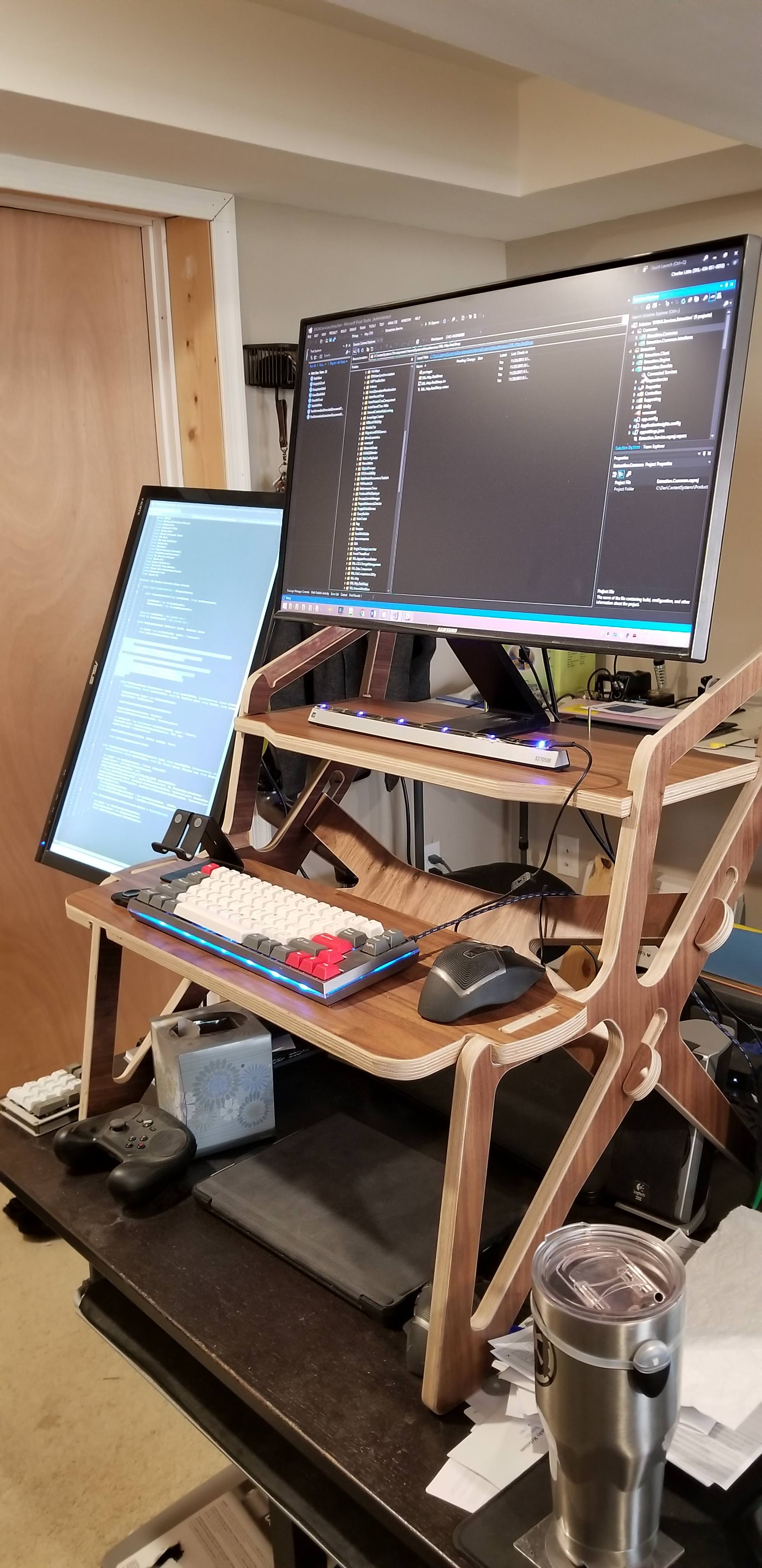
Have you got any feedback yet for those of us as might be interested, please?
I'd be very interested - studies of work environment design and ergonomic have shown that these factors can have profound effects on the worker's productivity and sense of well-being.
However, some recent research seems to indicate that the supposed benefits of open plan offices are not as straightforward as had been hypothesised/believed: The Open Office Revolution Has Gone Too Far

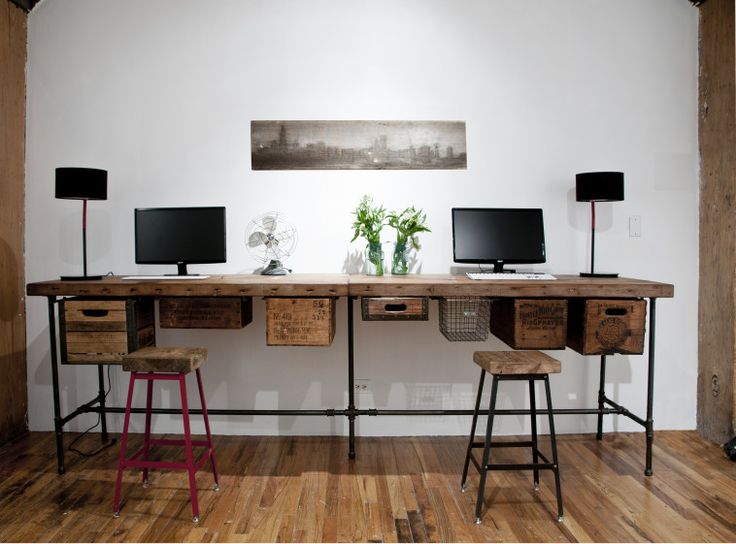 extraordinary-long-computer-desk-fancy-office-furniture-plans-with-1000-ideas-about-long-computer-desk-on-pinterest-masculine.jpg
(54.2 KB, 736x544 - viewed 726 times.)
| Report: U.S. workers hate ‘open’ office spaces Before you go knocking walls down or dismantling cubicles in the name of collaboration and productivity, peruse the results of this new survey. By Robby Brumberg - May 22, 2018 Would you change jobs to find a less annoying workspace? According to survey data collected by Bospar PR, it would appear many of us would—especially those toiling in an “open” office setting. The survey, which garnered responses from a diverse cross-section of 1,000 U.S. workers, found that 76 percent of Americans “hate open offices.” The top reasons cited included:
Despite a recent trend of employers tinkering with barrier-free offices, community benches and desk clumps, the science is not sanguine about open workspace productivity. Some have even called such layouts a “disaster.” What is it workers want, then?
As Bospar executive Curtis Sparrer put it: Quote “An overwhelming majority of Americans want to work in quiet places, but they can’t do that in today’s open office environments.” Workplace environment appears to be a hill that many employees are willing to die on—or at least take a pay cut over. According to the survey, Quote “Eighteen percent would pursue a new job to have a workspace they like better, and 9 percent would petition to work part-time in an environment they do like.” Amid the clamor for more collaboration, connectivity, corporate camaraderie and increased participation, companies are inevitably alienating some workers. Most, it would seem, would prefer to work in a quiet, non-distracting atmosphere. That might be the most universally desired and appreciated work perk of all. You can learn more about Bospar’s research here. |
In any event, I would suggest that such research is probably irrelevant, and that the only research that made (and still makes) standing desks a no-brainer for management is likely to be that accounting "research" which could demonstrate indisputably that standing desks:
- require a lower area of floor space per employee, which enables higher density packing, which reduces the average fixed costs (rent and rates based on square footage of occupancy), thus enabling a higher average profit per employee to be achieved.
- enable reduced/minimised office set-up, downsizing/upsizing or relocation costs, and reduced/minimised downtime associated with same, compared to conventional offices.



So why hasn't anything been done to provide what would essentially be improved working environments that were more conducive to productivity for office workers?seems likely :-/
From experience as a lapsed bean counter, my take is that it's still all about direct/indirect costs
...but 84% believing they can work better from home does not necessarily mean they can work better from home...Yes, I noticed that too. The survey is not a valid piece of research - it's just a survey. The 84% could all be mistaken. For example, like the 17 million people who voted to leave the EU in the British-held referendum.

Original address: https://www.donationcoder.com/forum/index.php?topic=26476.0