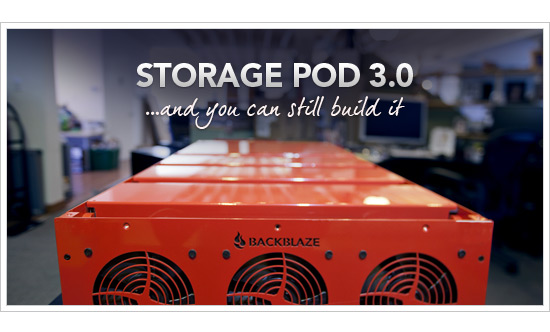
Well...the folks at Backblaze, creators of the StoragePod mentioned in
this post, have now come up with their third iteration of a massive and (relatively) inexpensive 180TB networked storage system. It uses off-the-shelf components and supports up to forty-five 3.5" drives in any capacity up to 4TB per drive. They also publish the full specifications so you can build one for yourself if you want to. (Note: If you do want one, however, you
will have to build your own. Backblaze doesn't sell them. They just tell you how they built theirs and freely share their plans and parts list.)
Component costs for an unpopulated StoragePod run $1942 USD - with this latest design being significantly more powerful and sporting better reliability stats than the previous ones. And for some extra icing on the cake, it's also $37
cheaper than the previous version.
Interesting stuff, with plenty of good server build info and tips. Even if you aren't planning on assembling something quite so large.
Server
porn links:
StoragePod v3.0 specs and info. 45Drives blog----------------------
 SmallNetBuilder
 also has a good write-up on this server. SmallNetBuilder is an excellent resource if you're interested in...well...small network building. Good site. Recommended!


-----------------------
I can just see renegade contemplating basing his own submerged darknet service
MegaRenegadePirateFreeNetScrewTheMediaMoguls&Trolls on this box.

 Arr! I'd dearly love to see you try to spank this monkey, Sir!
Or discover our resident
mad-builder SuperboyAC knocking together one or two of these puppies - purely for aesthetics - and
because he can!




 Recent Posts


