


 Recent Posts
9851
General Software Discussion / Re: Windows vs. Mac: I'm starting to change.
« Last post by 40hz on October 01, 2009, 06:52 PM »Macintosh? I was an early adopter:first a MacPlus, later an SE/30.
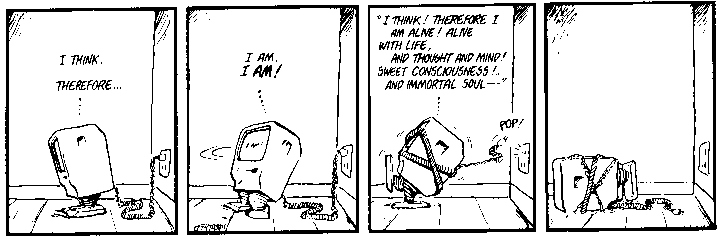
I've read all six volumes of Inside Macintosh. I've 'whined & dined' with Apple hipsters. I've attended Apple conferences. And I have used Macintosh computers with varying degrees of pleasure over the years.
But in the end - the Macintosh computer is still just another piece of technology. Something to learn; something to use; and something else to scrap when the time comes.
Maybe I'm just not that sophisticated, but I have yet to find anything I want, or need to do, that I can't also do on a Windows or NIX based PC.
Macs may be nice. But they're not essential.
At least not in my world.
I've read all six volumes of Inside Macintosh. I've 'whined & dined' with Apple hipsters. I've attended Apple conferences. And I have used Macintosh computers with varying degrees of pleasure over the years.
But in the end - the Macintosh computer is still just another piece of technology. Something to learn; something to use; and something else to scrap when the time comes.
Maybe I'm just not that sophisticated, but I have yet to find anything I want, or need to do, that I can't also do on a Windows or NIX based PC.
Macs may be nice. But they're not essential.
At least not in my world.


