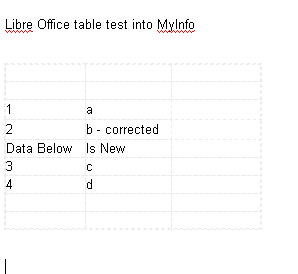
After reading SuperBoyAC's excellent treatise on "information collectors" I thought I would examine if I was using the most efficient tool for my purposes (nothing special). In my examination of one of the products I found a complete lack of support of tables unless I copy/pasted. Given the developer is a most gracious person and quite competent in coding, I decided to remove myself from the exalted throne and ask myself *if* my long-held persuasion that tables were/are indispensable for collecting/organizing/presenting/storing data.
My question is... if tables are not used how does one handle the data normally contained in tables?
FWIW - The software I am considering has everything else I need except tables. This is the only caveat I have to overcome.
[edit]
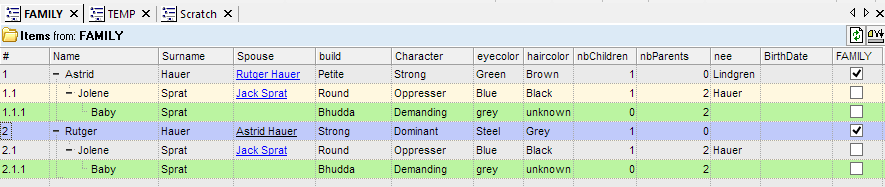
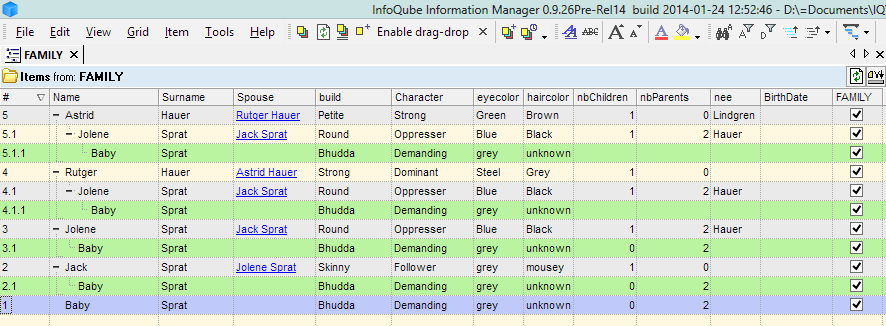
My primary purpose for using tables is to arrange data in numerous grids of related and structured information in order to evaluate different related entities. I do this so various items can be compared as to determine the "best" choice. Once I have made a decision the table serves as a referential repository. It is not uncommon for me to edit the tables numerous times a month. You might call my grids, "Living Tables." I hardly ever store data in any other form. As an example, I use a table to create characters for my fiction. Each row is a character with the columns being criteria of the character's person (eye color, hair color, build, temperament, etc). This allows for great checking and cross-referencing of the necessary conflicting attitudes and temperaments which allows those wonderful dramatic tensions.
[/edit]