I like my jazz one of two ways: Ultra-traditional or way-out-wacked. Guess which one this is?Thanks. That was rather good.
You like that? More here -> http://www.youtube.com/user/LakeStreetDive
I like my jazz one of two ways: Ultra-traditional or way-out-wacked. Guess which one this is?Thanks. That was rather good.
You like that? More here -> http://www.youtube.com/user/LakeStreetDive


Metal bands started using baritone guitars in the late 1980s, as it became increasingly popular to "down-tune" or "drop-tune". Early examples include Carcass (using B Standard) and Bolt Thrower (Using A Standard on Realms of Chaos). Pat O'Brien of the band Cannibal Corpse has a baritone guitar to allow him to use the tuning G# without experiencing tuning problems because of his use of a Floyd Rose Tremolo.Dylan Carlson of drone metal band Earth played a baritone guitar on Hex (Or Printing in the Infernal Method). Machine Head also uses baritone guitars tuned to Drop B and C# standard (tuned 40 cents sharp). Robb Flynn, singer and guitarist from the band also has a signature Epiphone Baritone Flying V called "Love Death".
I like the range of that guitar. I've actually found that I enjoy playing simple mid-tempo solos on the piano in that range from middle-c to a couple octaves down. Makes it sound funky.
Not what I'd call subtle...unless you're a Spaghetti Western or hardcore surf music fan. It's extremely easy to overdo it. And the baritone's sound character is distinctive enough that it can easily overwhelm an arrangement. Snarky Puppy compensated by going completely over the top with the low end. It worked for that piece. But you can only do so many songs like that before it starts to get gimmicky. Mr. League walked a fine line and pulled it off. Most players don't have his level of musical training or enough good
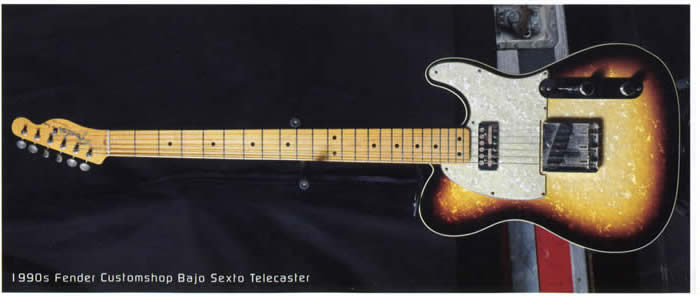
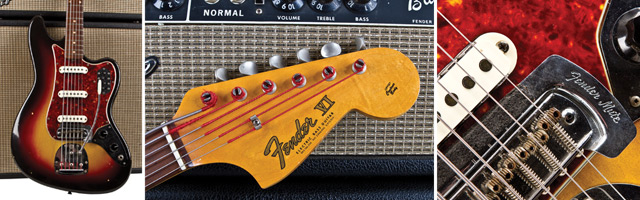
Quick note: don't confuse the baritone guitar with the rare six string Bass-VI /Basso Sexto that Fender had back in the 60s and early 70s. It looks similar, but it's a totally different sounding and playing instrument.
FWIW Ibanzez currently sells an 8-string guitar intended for the Metalhead that can't get low enough with their 7-string grunge plank. Can a 9-string be far behind?

Not a fan of more strings than 6 on any guitar, and 4 on the bass.
That said, when I get my next guitar actually built sometime in the next 10 years, it's gonna be strung up in C. Just sayin'![]()

And what of the piccolo bass? Which one is it gonna be? All these overlapping ranges, a man could go MAD I tell you!
QuoteFWIW Ibanzez currently sells an 8-string guitar intended for the Metalhead that can't get low enough with their 7-string grunge plank. Can a 9-string be far behind?
Oh, for the love of Pete, just STOP... STOP I SAY!! STAAAHHHHHHHPPPP!!
...
I SAID STAAAAAAAAAAHHH... oh never !@#$%^&ing mind...


Oh, for the love of Pete, just STOP... STOP I SAY!! STAAAHHHHHHHPPPP!!
I SAID STAAAAAAAAAAHHH... oh never !@#$%^&ing mind...
That said, when I get my next guitar actually built sometime in the next 10 years, it's gonna be strung up in C. Just sayin'Not Nashville or Methaney Nashville?![]()
7, 8 , 9, 10...
God! Before you know it, they'll have a 12 string guitar~!![]()
![]()

Robert Fripp's New Standard Tuning, maybe.


Musician Shows How to Sing Two Notes at Once in Mesmerizing Video
in Music | October 6th, 2014
Anna-Maria Hefele, a musician based in Munich, has an unusual talent. She can sing two notes at once. In the music world, it’s known as polyphonic overtone singing, and it’s believed that the practice originated and still endures in Mongolia. Above, Hefele offers a pretty captivating five-minute display of her technique. On her website, she notes that she offers concerts, lecture performances, and workshops in overtone singing. In fact, there’s a workshop being held later this month near Salzburg, Austria. Find updates on Hefele’s Facebook page. Enjoy!
)
(Think parts of Eddie Van Halen's solo in Panama or Somebody Get Me a Doctor for examples of where it does fit.)
This from OpenCulture.comQuoteMusician Shows How to Sing Two Notes at Once in Mesmerizing Video
in Music | October 6th, 2014
Anna-Maria Hefele, a musician based in Munich, has an unusual talent. She can sing two notes at once. In the music world, it’s known as polyphonic overtone singing, and it’s believed that the practice originated and still endures in Mongolia. Above, Hefele offers a pretty captivating five-minute display of her technique. On her website, she notes that she offers concerts, lecture performances, and workshops in overtone singing. In fact, there’s a workshop being held later this month near Salzburg, Austria. Find updates on Hefele’s Facebook page. Enjoy!
She's pretty amazing! (She's also rather pretty too.)

the video is live, and every human being is able learn overtone singing....well...not starting directly with polyphonic overtone singing.... but singing overtones on one fundamental isn't too hard.
I would like to see her do a tutorial on how to do it. Just a very basic one. But everyone can do it? Wow. That's a big claim.


Definitely my kind of weird.really good as well
Saw a Mongolian guy doing overtone in concert a few years back but cant remember his name...
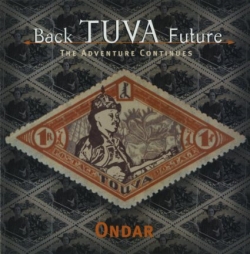
As a stamp-collecting boy always fascinated by remote places, Nobel Prize–winning physicist Richard Feynman was particularly taken by the diamond-shaped stamps from a place called Tannu Tuva deep within Outer Mongolia. He hoped, someday, to travel there.
In 1977, Feynman and his sidekick— fellow drummer and geography enthusiast Ralph Leighton—set out to make arrangements to visit Tuva, doing noble and hilarious battle with Soviet red tape, befriending quite a few Tuvans, and discovering the wonders of Tuvan throat-singing. Their Byzantine attempts to reach Tannu Tuva would span a decade, interrupted by Feynman's appointment to the committee investigating the Challenger disaster, and his tragic struggle with the cancer that finally killed him. Tuva or Bust! chronicles the deepening friendship of two zany, brilliant strategists whose love of the absurd will delight and instruct. It is Richard Feynman's last, best adventure.

Original address: https://www.donationcoder.com/forum/index.php?topic=15984.0