https://github.com/MarcoPon/SeqBox
Tools are in Python 3.x, so they should work just about anywhere. I tried on a server with Linux, Win 10 PC, Raspberry Pi, Android.
Quote
A SeqBox container have a blocksize sub/equal to that of a sector, so can survive any level of fragmentation. Each block have a minimal header that include a unique file identifier, block sequence number, checksum, version. Additional, non critical info/metadata are contained in block 0 (like name, file size, crypto-hash, other attributes, etc.).
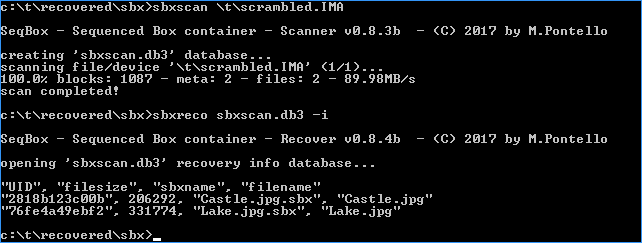
If disaster strikes, recovery can be performed simply scanning a volume/image, reading sector sized slices and checking blocks signatures and then CRCs to detect valid SBX blocks. Then the blocks can be grouped by UIDs, sorted by sequence number and reassembled to form the original SeqBox containers.

Tools are in Python 3.x, so they should work just about anywhere. I tried on a server with Linux, Win 10 PC, Raspberry Pi, Android.
 Online TrID file identifier
 SeqBox