And good luck.
Thx, I expect I'll need it. But I also expect to work for it.


 Topic: Worth Reading: Trevor Pott's editorial on NSA PRISM and its real ramifications (Read 225,723 times)


And good luck.


And good luck.
Thx, I expect I'll need it. But I also expect to work for it.


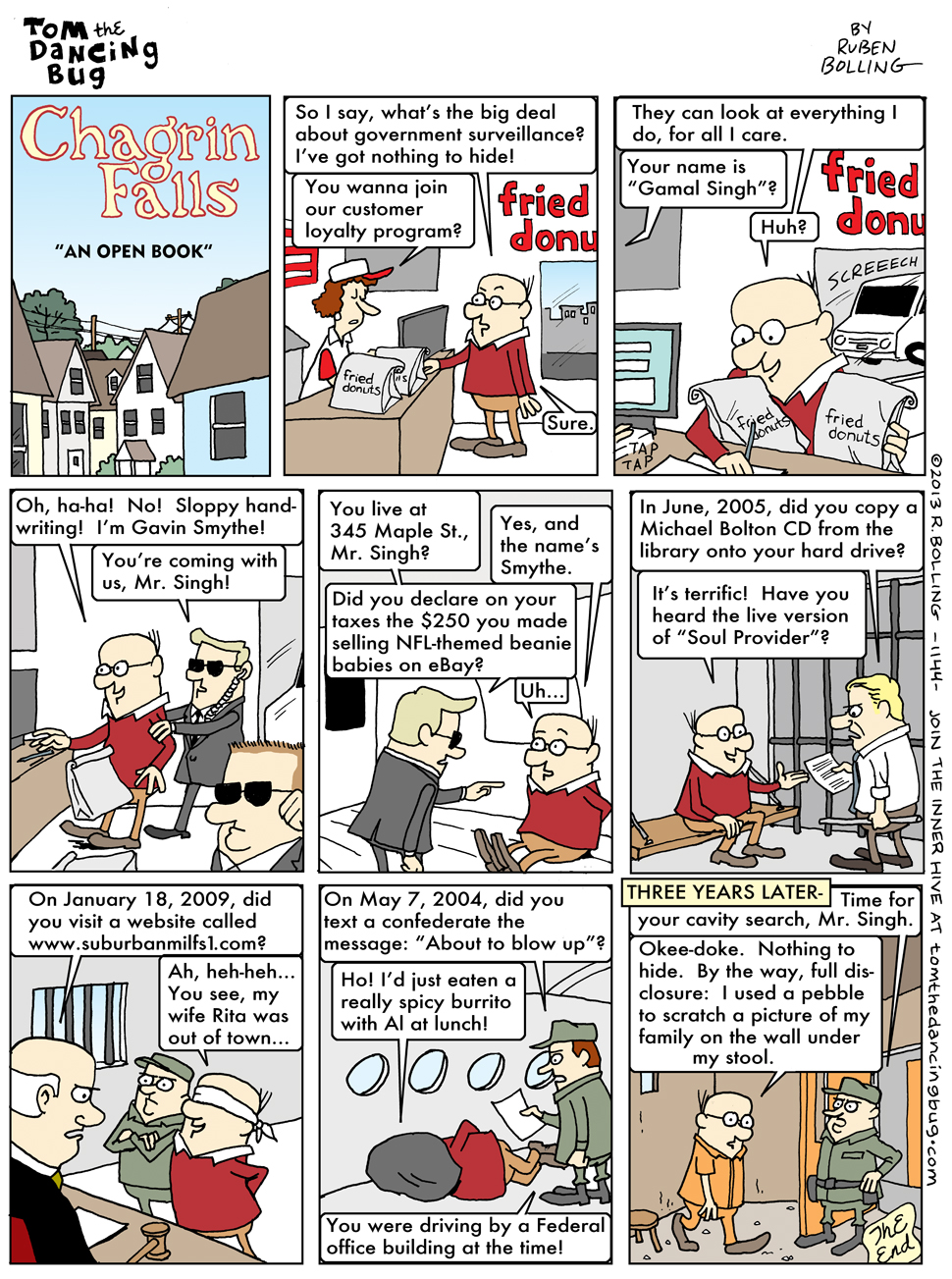
A not too funny riff on what might happen someday...

...Having used OpenDNS + DNSCrypt for a while now with no issues, I have been trialling VPN gate for greater security/privacy, and have found it pretty good.
Coincidentally, I read this rather relevant post in LewRockwell.com today: Want to Defend Your Privacy?
In the post, he discusses using VPN (Virtual Private Network) services, refers to various links (some offshore to the US) for improved security/privacy, and recommends consideration be given to the use of the likes of:
...“It means that US companies are forcing non-American companies not to allow people to protest their privacy and be anonymous, and thus the NSA can spy even more. It’s just INSANE,” Sunde says. ...How could this be?

Whoops! Amerikans trying to avail themselves of offshore-from-US VPN providers may face some difficulties: Mastercard and Visa Start Banning VPN Providers?Quote...“It means that US companies are forcing non-American companies not to allow people to protest their privacy and be anonymous, and thus the NSA can spy even more. It’s just INSANE,” Sunde says. ...How could this be?


How to hide text from NSA's automated surveillance
07.06.2013 11:50 AM
To keep supercomputers from reading your email, use a font the robots can't read.
http://www.pcworld.com/article/2043342/how-to-hide-text-from-nsas-automated-surveillance.html
The outrage about Prism spying is wearing off already
07.07.2013 10:20 AM
Some people are deeply upset about the latest incursions into our privacy. But as a society, we don't seem to care all that much.
http://www.pcworld.com/article/2043777/the-outrage-about-prism-spying-is-wearing-off-already.html
...And yes...somebody has been drinking.

Some students and I had an exchange with NSA recruiters today. The audio and a rough transcript below.
The NSA came to recruit at a language program at the University of Wisconsin where I am spending my summer learning a language. Two recruiters, a redhead who looked more like a middle-aged 2013 NSA flyer copymother (listed as “NSA_F” below) and a portly, balding man (“NSA_M”), began to go through slides explaining the NSA and its work.
I had intended to go simply to hear how the NSA is recruiting at a moment when it’s facing severe challenges, what with the Edward Snowden and all. Dismayingly, however, a local high school teacher had thought it was good to bring 5 of his students to the session. They were smartly dressed, some of them even wearing ties as if there might be a job interview, young faces in a classroom of graduate students. They sat across from me at the roundtable. It was really their presence that goaded me–and I think a couple of other students–into an interaction with the recruiters.
Roughly half an hour into the session, the exchange below began. I began by asking them how they understood the term “adversary” since the surveillance seems to be far beyond those the American state classifies as enemies, and their understanding of that ties into the recruiters’ earlier statement that “the globe is our playground.” I ended up asking them whether being a liar was a qualification for the NSA because:
@Madi_Hatter a 2008 slideshow for college seniors considering CIA careers asked potential applicants: “Are you good at manipulating people?”
— David Mehnert (@Savants) July 2, 2013
The NSA’s instrumental understanding of language as well as its claustrophobic social world was readily apparent. One of the recruiters discussed how they tend to socialize after work, dressing up in costumes and getting drunk (referenced below). I can imagine that also exerts a lot of social pressure and works as a kind of social closure from which it would be difficult to escape. The last thing I want to point out –once again– their defense seems to be that it’s legal. What is legal is not just.
Someone else happened to record it on an iPhone, hence the audio quality. It’s been edited mainly to cut garbled audio or audio that wouldn’t have made sense and edit out questions and comments from people who didn’t explicitly say it was ok to post their audio.You’ll hear the sound drop out for a second to mark the cuts.
Rough Transcript
Me: You said earlier that the two tasks that you do: one is tracking down the communications of your adversaries and the other is protecting the communications of officials. So, do you consider Germany and the countries the US has been spying on to be adversaries or are you, right now, not speaking the truth?
Me: I mean do you consider European countries, etc, adversaries or are you, right now, not telling us the truth and lying when you say that actually you simply track – you keep focusing on that, but clearly the NSA is doing a lot more than that, as we know, so I’m just asking for a clarification.
NSA_F: I’m focusing on what our foreign intelligence requires of [garbled] so, I mean you know, You can define adversary as enemy and clearly, Germany is not our enemy but would we have foreign
national interest from an intelligence perspective on what’s going on across the globe. Yeah, we do. That’s our requirements that come to us as an intelligence community organization from the policymakers, from the military, from whoever –our global so–
Me: So adversary –adversaries you actually mean anybody and everybody. There’s nobody then by your definition that is not an adversary. Is that correct?
NSA_F: That is not correct.
Me: Who is not an adversary?
NSA_F: Well, ok. I can answer your questions but the reality is—
Me: No, I’m just trying to get a clarification because you told us what the two nodes of your work are but it’s not clear to me what that encompasses and you’re being fairly unclear at the moment. Apparently it’s somebody who’s not just an enemy. It’s something broader than that. And yet, it doesn’t seem to encompass everyone.
NSA_M: So for us, umm, our business is apolitical. Ok. We do not generate the intelligence requirements. They are levied on us so, if there is a requirement for foreign intelligence concerning this issue or this region or whatever then that is. If you wanna use the word adversary, you ca– we
This is not a tampon.
This is not a tampon.
might use the word ‘target.’ That is what we are going after. That is the intelligence target that we are going after because we were given that requirement. Whether that’s adversary in a global war on terrorism sense or adversary in terms of national security interests or whatever – that’s for policymakers, I guess to make that determination. We respond to the requirements we are given, if that helps. And there’s a separation. As language analysts, we work on the SIG INT side of the house. We don’t really work on the information assurance (?) side of the house. That’s the guy setting up, protecting our communications.
Me: I’m just surprised that for language analysts, you’re incredibly imprecise with your language. And it just doesn’t seem to be clear. So, adversary is basically what any of your so-called “customers” as you call them –which is also a strange term to use for a government agency– decide if anybody wants, any part of the government wants something about some country, suddenly they are now internally considered or termed an ‘adversary.’ That’s what you seem to be saying.
[Pause]
NSA_M: I’m saying you can think about it using that term.
NSA_F: But the reality is it’s our government’s interest in what a foreign government or foreign country is doing.
Me: Right. So adversary can be anyone.
NSA_M: As long as they levy their requirement on us thru the right vehicle that exists for this and that it is defined in terms of a foreign intelligence requirement, there’s a national framework of foreign intelligence – what’s it called?
NSA_F: nipa
NSA_M: the national prioritization of intelligence framework or whatever that determines these are the issues that we are interested in, these are how they are prioritized.
Me: Your slide said adversary. It might be a bit better to say “target” but it’s not just a word game. The problem is these countries are fairly –I think Afghanistan is probably not shocked to realize they’re on the list. I think Germany seems to be quite shocked at what has been going on. This is not just a word game and you understand that as well as I do. So, it’s very strange that you’re selling yourself here in one particular fashion when it’s absolutely not true.
NSA_F: I don’t think we’re selling ourselves in an untrue fashion.
Me: Well, this is a recruiting session and you are telling us things that aren’t true. We also know that the NSA took down brochures and fact sheets after the Snowden revelations because those brochures also had severe inaccuracies and untruths in them. So, how are we supposed to believe what you’re saying?
[pause]
Student A (female): I have a lifestyle question that you seem to be selling. It sounds more like a brochure smallercolonial expedition. You know the “globe is our playground” is the words you used, the phrasing that you used and you seem to be saying that you can do your work. You can analyze said documents for your so-called customers but then you can go and get drunk and dress up and have fun without thinking of the repercussions of the info you’re analyzing has on the rest of the world. I also want to know what are the qualifications that one needs to become a whistleblower because that sounds like a much more interesting job. And I think the Edward Snowdens and the Bradley Mannings and Julian Assanges of the world will prevail ultimately.
NSA_M: I’m not sure what the –
Me: The question here is do you actually think about the ramifications of the work that you do, which is deeply problematic, or do you just dress up in costumes and get drunk? [This is in reference to an earlier comment made by the recruiters in which NSA_F said: they do heady work and then they go down to the bar and dress up in costume and do karaoke. I tweeted it earlier.]
NSA_M: That’s why, as I was saying, reporting the info in the right context is so important because the consequences of bad political decisions by our policymakers is something we all suffer from.
Student A: And people suffer from the misinformation that you pass along so you should take responsibility as well.
NSA_M: We take it very seriously that when we give info to our policy makers that we do give it to them in the right context so that they can make the best decision with the best info available.
Student B: Is that what Clapper was doing when he perjured himself in front of Congress? Was he giving accurate information when he said we do not collect any intelligence on the US citizens that it’s only occasionally unintentionally or was he perjuring himself when he made a statement before Congress under oath that he later declared to be erroneous or at least, untruthful the least truthful answer? How do you feel personally having a boss whose comfortable perjuring himself in front of Congress?
NSA_F: Our director is not general Clapper.
Student B: General Alexander also lied in front of Congress.
NSA_F: I don’t know about that.
Student B: Probably because access to the Guardian is restricted on the NSA’s computers. I am sure they don’t encourage people like you to actually think about these things. Thank God for a man like Edward Snowden who your organization is now part of a manhunt trying to track down, trying to put him in a little hole somewhere for the rest of his life. Thank god they exist.
Student A: and why are you denigrating anything else with language? We don’t do this; we don’t do that; we don’t read cultural artifacts, poetry? There are other things to do with language other than joining this group, ok. [last line of this comment was directed at the high school students.]
NSA_M: This job is not for everybody. Academia is a great career for people with language.
Me: So is this job for liars? Is this what you’re saying? Because, clearly, you’re not able to give us forthright answers. Given the way the way the NSA has behaved, given the fact that we’ve been lied to as Americans, given the fact that fact sheets have been pulled down because they clearly had untruths in them, given the fact that Clapper and Alexander lied to Congress — is that a qualification for being in the NSA? Do you have to be a good liar?
NSA_F: I don’t consider myself to be a liar in any fashion and the reality is I mean, this was billed as if you are potentially interested in an NSA career come to our session. If you’re not, if this is your personal belief and you’re understanding of what has been presented then there is nothing that says you need to come and apply and work for us. We are not here — our role as NSA employees is not to represent NSA the things that are in the press right now about the NSA. That’s not our role at all. That’s not my area of expertise. I have not read–
Me: Right, but you’re here recruiting so you’re selling the organization. I mean I’m less interested in what your specialized role is within in the NSA. I don’t care. The fact is you’re here presenting a public face for the NSA and you’re trying to sell the organization to people that are as young as high schoolers and trying to tell us that this is an attractive option in a context in which we clearly know that the NSA has been telling us complete lies. So, I’m wondering is that a qualification?
NSA_F: I don’t believe the NSA is telling complete lies. And I do believe that you know, people can, you can read a lot of different things that are portrayed as fact and that doesn’t make them fact just because they’re in newspapers.
Student A: Or intelligence reports.
NSA_F: That’s not really our purpose here today and I think if you’re not interested in that. There are people here who are probably interested in a language career.
Me: The trouble is we can’t opt out of NSA surveillance and we don’t get answers. It’s not an option. You’re posing it as a choice like ‘oh you know people who are interested can just sit here and those of us who are not interested can just leave.’ If I could opt out of NSA surveillance and it was no longer my business, that would be fine. But it is my business because all of us are being surveilled so we’re here.
NSA_F: That is incorrect. That is not our job. That is not our business.
Me: That doesn’t seem to be incorrect given the leaks. Right, and the NSA has not been able to actually put out anything that is convincing or contrary to that.
[pause]
Student A: I don’t understand what’s wrong with having some accountability.
NSA_F: We have complete accountability and there is absolutely nothing that we can or have done without approval of the 3 branches of the government. The programs that we’re enacting–
Student B: Did you read the NY Times? Did you read about the illegal wiretapping? Why are you lying?
NSA_M: Did you read the Senate judiciary report that said there have only been 15 (?) instances, and they were all documented and done correctly by the FISA courts–
Student B: I’d love to read the opinion of the FISA court that says that this program one of the NSA’s programs was violating the 4th amendment right of massive amounts of Americans, but it’s a big ‘ol secret and only people like you who will not talk with their wives when they get home about what they do all day are able to…[garbled]…protecting us from the ‘terrorist threat’, but let’s let everyone here hear more information about karaoke.
–666–
NSA Recruitment Drive Goes Horribly Wrong
Posted by Soulskill on Friday July 05, 2013 @03:08PM
from the recruitment-unsuccessful dept.
An anonymous reader writes "The Guardian is running a story about a recent recruitment session held by the NSA and attended by students from the University of Wisconsin which had an unexpected outcome for the recruiters. 'Attending the session was Madiha R Tahir, a journalist studying a language course at the university. She asked the squirming recruiters a few uncomfortable questions about the activities of NSA: which countries the agency considers to be 'adversaries', and if being a good liar is a qualification for getting a job at the NSA.' Following her, others students started to put NSA employees under fire too. A recording of the session is available on Tahir's blog."




PRISM v2.0 will be fun, colorful, and voluntary. Come one, come all, and submit all your email data. We will figure out who you know and communicate with, even if you don't volunteer. We are pretty sure your friends will think the infographics are cool looking and want their own....and you'll be on it.
PRISM v2.0 will be fun, colorful, and voluntary. Come one, come all, and submit all your email data. We will figure out who you know and communicate with, even if you don't volunteer. We are pretty sure your friends will think the infographics are cool looking and want their own....and you'll be on it.
First 300 to sign up get a free "I was water boarded at Gitmo for posting something stupid on FaceBook" T-Shirt!
Rise of the Warrior Cop: The Militarization of America's Police Forces
by Radley Balko
Edition: Hardcover
Price: $17.86
36 used & new from $11.40
46 of 46 people found the following review helpful
5.0 out of 5 stars A must read!, July 1, 2013
Amazon Verified Purchase(What's this?)
This review is from: Rise of the Warrior Cop: The Militarization of America's Police Forces (Hardcover)
In his new book, Rise of the Warrior Cop, author Radley Balko provides a detailed history of our decline into a police state.
He works his way through this history in a sound way describing police raid upon police raid gone terribly wrong, resulting in a useless loss of life. He discusses police agencies that serve populations of only 1,000 people but receive federal funding for military-type weapons and tank-style vehicles. We have also seen a total disregard for "The Castle Doctrine" which has been held dear by our citizens since the colonial days. The "Castle Doctrine" is the idea that a man's home is his castle and a warrant signed by a judge is necessary to enter and search the "castle." Balko cogently explains the reason for all of this: The war on drugs and the war on terror are really wars on our own people.
A profession that I was once proud to serve in has become a militarized police state. Officers are quicker to draw their guns and use their tanks than to communicate with people to diffuse a situation. They love to use their toys and when they do, people die.
The days of the peace officer are long gone, replaced by the militarized police warrior wearing uniforms making them indistinguishable from military personnel. Once something is defined as a "war" everyone becomes a "warrior." Balko offers solutions ranging from ending the war on drugs, to halting mission creep so agencies such as the Department of Education and the FDA don't have their own SWAT teams, to enacting transparency requirements so that all raids are reported and statistics kept, to community policing, and finally to one of the toughest solutions: changing police culture.
Police culture has gone from knocking on someone's door to ask him to come to the station house, to knocking on a door to drag him to the station house, to a full SWAT raid on a home.
Two quotes from the HBO television series "The Wire" apply quite appropriately to this situation:
"This drug thing, this ain't police work. Soldiering and police, they ain't the same thing."
"You call something a war and pretty soon everyone's gonna' be running around acting like warriors. They're gonna' be running around on a damn crusade, storming corners, slapping on cuffs and racking up body counts. And when you're at war you need an enemy. And pretty soon damn near everybody on every corner's your enemy. And soon the neighborhood you're supposed to be policing, that's just occupied territory."
Detective John J. Baeza, NYPD (ret.)
Manhattan Special Victims Squad
Manhattan North Narcotics
32nd Precinct, Harlem

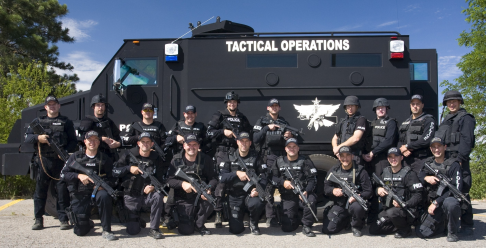 swwat.png
(255.5 KB, 486x248 - viewed 2115 times.)
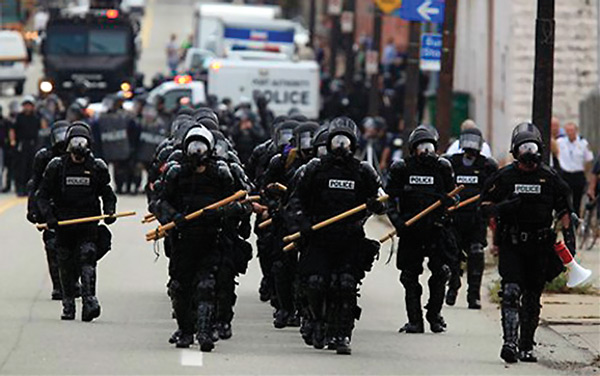 Stock_police_riot_h.jpg
(80.0 KB, 600x376 - viewed 1148 times.)
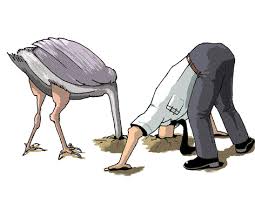
Some people (not me, you understand), might say that the Stasi would seem to be alive and well in both countries, and that, evidently, you can't keep a "good idea" down for long.
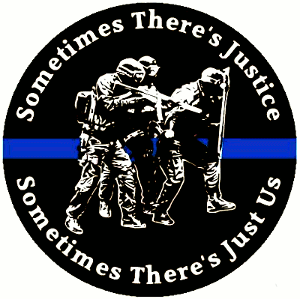 seriously.gif
(23.1 KB, 300x299 - viewed 2107 times.)
 bryant.jpg
(11.1 KB, 320x240 - viewed 1738 times.)
Original address: https://www.donationcoder.com/forum/index.php?topic=35143.0