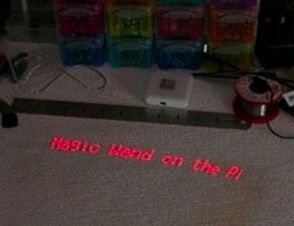
A team at the free university of Bolzano, Italy, recently built MegaRPI, a cluster of 300 Raspberries!
http://megarpi.nickpreda.it/
http://megarpi.nickpreda.it/


 Topic: Raspberry Pi's $35 Linux PC (Read 154,961 times)


 $199, 4.2” computer is Intel’s first Raspberry Pi competitor.jpg
(32.7 KB, 640x359 - viewed 3804 times.)
(see attachment in previous post)
$199, 4.2” computer is Intel’s first Raspberry Pi competitor Ars Technica
It's notable that the MinnowBoard is an open hardware platform, a distinction that Arduino and BeagleBone can claim but Raspberry Pi cannot. Users could create their own MinnowBoards by buying the items on the bill of materials—all the design information is published, and CircuitCo chose components that can be purchased individually rather than in the bulk quantities hardware manufacturers are accustomed to, Anders said. Users can also buy a pre-made MinnowBoard and make customizations or create their own accessory boards to expand its capability.
And being an open hardware platform means that the source code of (almost) all the software required to run the platform is open.
In a keynote address, Intel CTO Dirk Hohndel told the LinuxCon crowd that the MinnowBoard was "specifically designed as the first open hardware board based on x86, and that allows you to build derivatives without an NDA. All the pieces are open and available, all the blueprints you need, all the source files you need. You can create your own embedded platforms without Intel, without any of the vendors involved."
There's just one exception: with the graphics processing unit, only the binary files required to drive the GPU are available, as the source code remains closed. Anders said that's a sticking point for some purists, but he's hoping that "as long as we continue to keep pressure on companies like Intel, Texas Instruments, and Freescale… eventually they'll see the light and say, 'we'll make these open as well.'"
Although it's more than four times the price of the BeagleBone Black, the MinnowBoard is also four or five times more powerful, according to Anders. "If you look at optimizing a few things, you can get it up to 10 times more powerful," he said.
The most likely use cases today aren't hobbyist applications but industrial uses, Anders said. "The BeagleBone is a very small, low-power device, and it's targeted for some very specific applications for hobbying. You know, developing small proof-of-concept designs," Anders said. "Our initial offer for the MinnowBoard is actually more targeted toward industrial automation, industrial controls. What you'll find is a lot of manufacturers, companies creating products, if they want to create an x86 design, they have to buy a third-party reference platform which is closed. They have to buy large software support packages, support contracts, and they generally don't get the right to use the existing design as it is. They have to buy additional licenses and things to create the product."


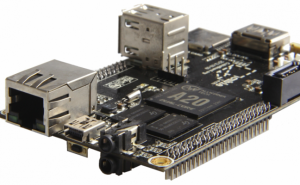
Specification
- CPU:ARM® Cortex™-A7 Dual-Core
- GPU:ARM® Mali400MP2, Complies with OpenGL ES 2.0/1.1
- Memory:1GB DDR3 @960M
- Storage:4GB internal NAND flash, up to 64GB on uSD slot, up to 2T on 2.5 SATA disk
- Power:5VDC input 2A or USB otg input
- Networking:10/100 ethernet, optional wifi
- USB : Two USB 2.0 HOST, one USB 2.0 OTG
- Extended Interfaces: 96 extend pin interface, including I2C, SPI, RGB/LVDS, CSI/TS, FM-IN, ADC, CVBS, VGA, SPDIF-OUT, R-TP, and more
- Other: One IR
On the software side, cubieboard2 support both android 4.2 Jelly Bean, Ubuntu 12.04 and other Linux distributions.

Why pay for a VPS when you can have your own server?
EDIS will colocate your RasPi for free at their datacenter in Austria.
Why pay for a VPS when you can have your own server?
EDIS will colocate your RasPi for free at their datacenter in Austria.
Tried to jump on this, but the "Order now" button is disabled. Rats.
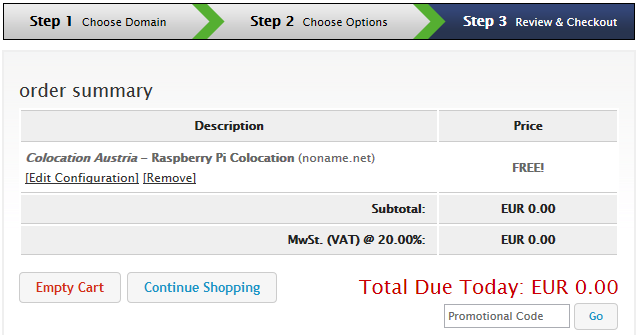
Worked for me just now.
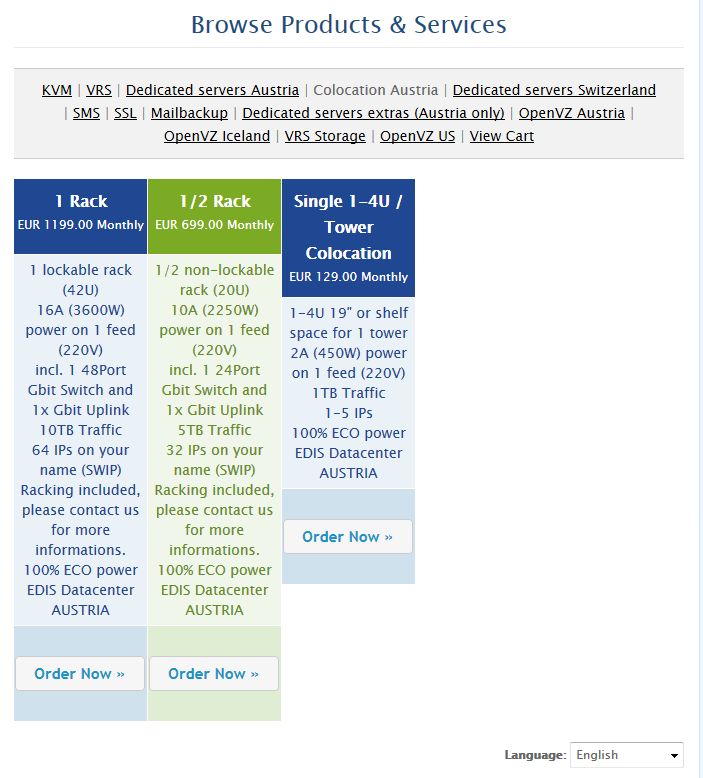

Huh - now I don't even get an "Order now" button. The Free Raspberry Pi option is completely missing from the colocation ordering page now.


I wonder if it's because I'm in the US?
Just had a reply to an email I sent them - EDIS is out of slots, but there was a glitch that allowed some orders to proceed.

And seriously, who wants to deal with the US when it comes to network anything these days?


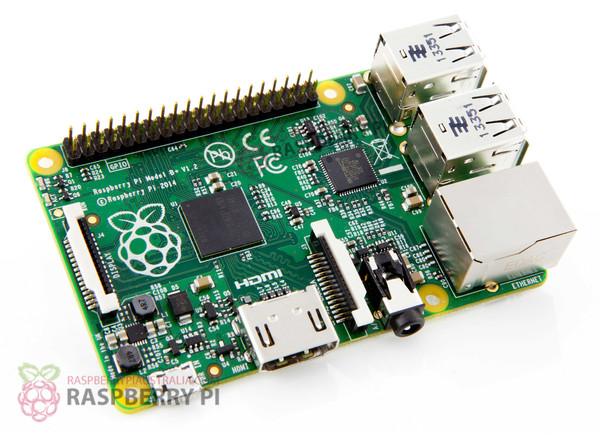
What's the same:
- Same Broadcom BCM2835 Chipset
- Same 512MB RAM
- Same full size HDMI port
- Same 10/100 Ethernet port
- Same CSI camera port and DSI display ports
- Same micro USB power supply connection
What has changed:
- Now comes with 4 USB ports so you can now connect more devices than ever to your Raspberry Pi.
- There is a 40pin extended GPIO so you can build even bigger and better projects than ever before. The first 26 pins are identical to the Model B to provide 100% backward compatibility for your projects.
- Micro SD slot instead of the full size SD slot for storing information and loading your operating systems.
- Advanced power management:
- You can now provide up to 1.2 AMP to the 4 USB ports – enabling you to connect more power hungry USB devices without needing an external USB hub. (This feature requires a 2Amp micro USB Power Supply)
- The B+ board now uses less power (600mA) than the Model B Board (750mA) when running
- Combined 4-pole jack for connecting your stereo audio out and composite video out
Please note: The Raspberry Pi Model B+ is laid-out differently to the previous Raspberry Pis and existing enclosures and crusts (daughter boards) may not fit. Checkout the data sheet downloads below.
Specifications:
- Chip: Broadcom BCM2835 SoC
- Core Architecture: ARM11
- CPU: 700 MHz Low Power ARM1176JZFS Applications Processor
- GPU
- Dual Core VideoCore IV® Multimedia Co-Processor
- Provides Open GL ES 2.0, hardware-accelerated OpenVG, and 1080p30 H.264 high-profile decode
- Capable of 1Gpixel/s, 1.5Gtexel/s or 24GFLOPs with texture filtering and DMA infrastructure
- Memory: 512MB SDRAM
- Operating System: Boots from Micro SD card, running a version of the Linux operating system
- Dimensions: 85 x 56 x 17mm
- Power: Micro USB socket 5V, 2A
- Ethernet: 10/100 BaseT Ethernet socket
- Video:
- HDMI (rev 1.3 & 1.4)
- USB: 4 x USB 2.0 Connector
- GPIO Connector:
- 40-pin 2.54 mm (100 mil) expansion header: 2x20 strip
- Providing 27 GPIO pins as well as +3.3 V, +5 V and GND supply lines
- Camera Connector: 15-pin MIPI Camera Serial Interface (CSI-2)
- JTAG: Not populated
- Display Connector: Display Serial Interface (DSI) 15 way flat flex cable connector with two data lanes and a clock lane
- Memory Card Slot: SDIO
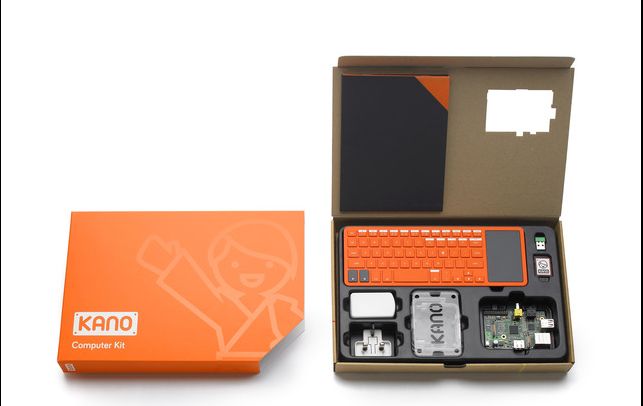
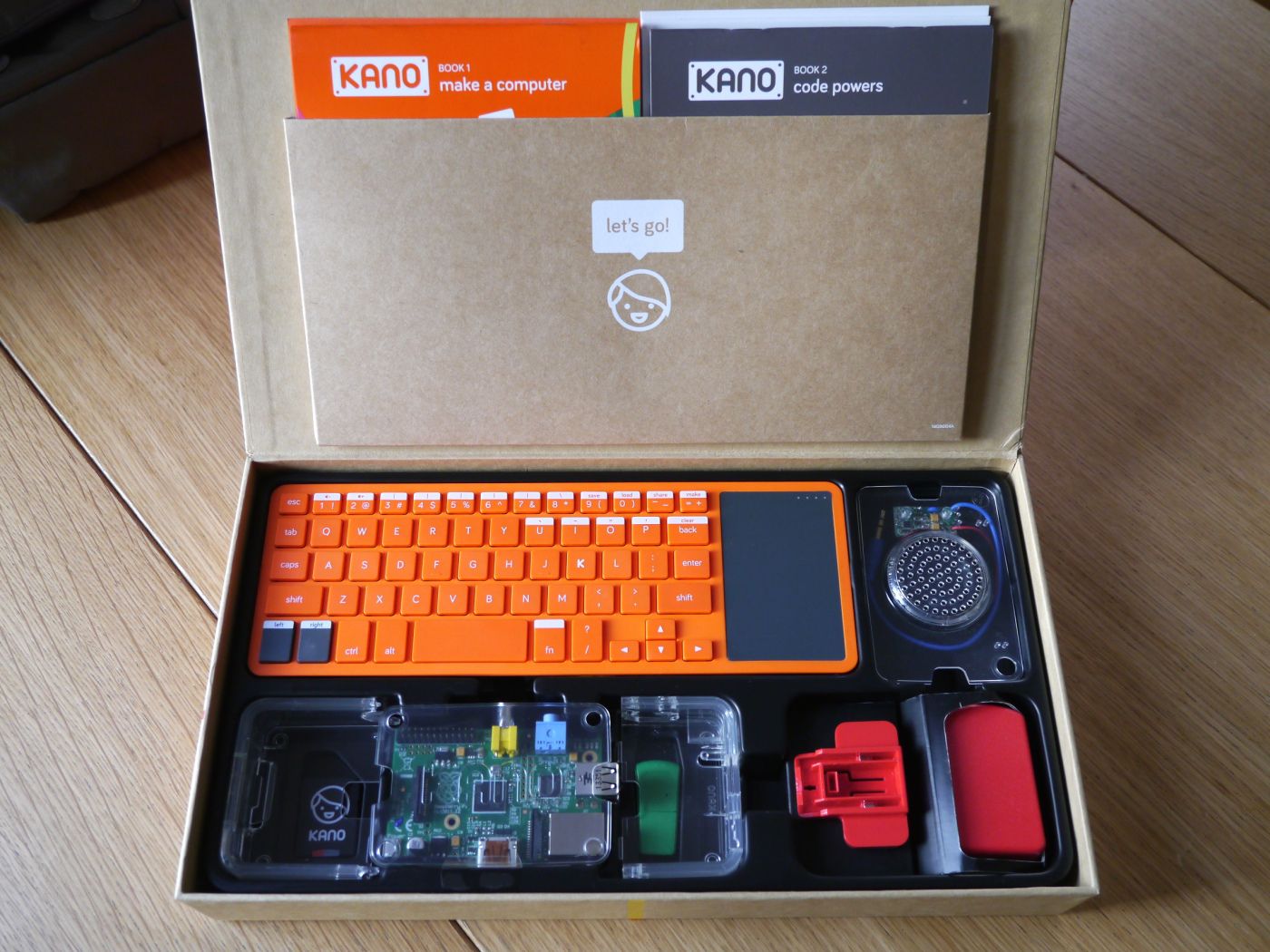 Kano Ships Its First 18,000 Learn-To-Code Computer Kits.jpg
(203.3 KB, 1400x1050 - viewed 387 times.)
Original address: https://www.donationcoder.com/forum/index.php?topic=31312.0
 Online TrID file identifier
 SeqBox