


No...it's not because Microsoft has decided to become best of friends with the Linux community.
It's because of what they plan on borrowing from Apple: a walled-garden app store.
This in from OSNews.com (link to full article here):
Some of you may recall Bill Gates mentioning some years back that he felt everyone who developed for the Microsoft platform should be subject to some sort of licensing and royalty fee. Because everything that runs on Windows, of necessity, makes use of systems services which are made up of millions of lines of proprietary code developed by Microsoft. And with the advent of the .Net framework it now goes beyond just system services.
In some respects this is very similar to the "bad old days" of locked-in operating systems and overpriced programs. Those who go back to the days of mainframe and minicomputers will remember what that used to be like. You want software? You have to get it from the guy who built your machine. And prices? How about: $5000 for an OS license up front plus $500 per month to keep it there. Basic productivity applications starting at $2500 each. Clunky language compilers that cost thousands. It was something the the era of personal computing was supposed to have freed us from once and for all.
But it looks like the bad days are coming back. Especially now that Apple and Microsoft have both effectively declared war on the entire notion of "personal" computing with their restricted platform plans.
I can only hope there's a massive revolt on the part of PC users worldwide.
Because if there isn't, that pretty much leaves GNU/Linux (and BSD) as the last unencumbered personal computing platforms available. And probably the only two with sufficient momentum and support to be a viable alternative.
***
It's been considered 'hip' of late to blast Richard Stallman for his "reactionary" and "unyielding" stance opposing proprietary computing platforms. He's been labelled everything from "anarchist" to "hippy" - with stops along the way to toss "un-American," "anti-business," and "communist" into the mix .
If Microsoft goes through with its plans - and there's no reason to think they won't - these critics can add one more label to Richard Stallman's name.
The label is: prescient.

It's because of what they plan on borrowing from Apple: a walled-garden app store.
This in from OSNews.com (link to full article here):
Quote
Metro Applications Restricted to Windows Store
posted by Thom Holwerda on Tue 20th Sep 2011 22:30 UTC
Why, would you look at this. All this time we were expecting Apple to be the first one to flip the switch and limit desktop users to Mac App Store applications and turn Mac OS X into a walled garden, but in fact, Microsoft will be the first to flip this switch. As it turns out, Metro applications can only be installed through the Windows Store - with sideloading only for enterprises and developers (this doesn't apply to legacy applications).
I hadn't yet thought about all this yet, what, with the massive shift from the desktop to Metro in Windows 8. However, as MSDN explains, Metro applications in Windows 8 can only be installed through the Windows Store. Sideloading will only be enabled for enterprises and developers. I'm also fairly sure the relevant registry key will be easily toggled for us geeks.
"All roads, as the saying goes, lead to the Windows Store," Microsoft writes, "For Metro style apps, that is, the Windows Store is the only means of general distribution (enterprise customers and developers can bypass the store to side-load apps)."
Microsoft mentions the usual benefits, and I'm sure those are all pretty valid. The company does take a 30% cut here, similar to what Apple takes for iOS and Mac OS X. Still, the idea that a vanilla installation of a desktop operating system - without any, probably warranty-voiding registry editing - will be restricted to Microsoft-approved applications doesn't sit well with me.
Some of you may recall Bill Gates mentioning some years back that he felt everyone who developed for the Microsoft platform should be subject to some sort of licensing and royalty fee. Because everything that runs on Windows, of necessity, makes use of systems services which are made up of millions of lines of proprietary code developed by Microsoft. And with the advent of the .Net framework it now goes beyond just system services.
In some respects this is very similar to the "bad old days" of locked-in operating systems and overpriced programs. Those who go back to the days of mainframe and minicomputers will remember what that used to be like. You want software? You have to get it from the guy who built your machine. And prices? How about: $5000 for an OS license up front plus $500 per month to keep it there. Basic productivity applications starting at $2500 each. Clunky language compilers that cost thousands. It was something the the era of personal computing was supposed to have freed us from once and for all.
But it looks like the bad days are coming back. Especially now that Apple and Microsoft have both effectively declared war on the entire notion of "personal" computing with their restricted platform plans.
I can only hope there's a massive revolt on the part of PC users worldwide.
Because if there isn't, that pretty much leaves GNU/Linux (and BSD) as the last unencumbered personal computing platforms available. And probably the only two with sufficient momentum and support to be a viable alternative.
***
It's been considered 'hip' of late to blast Richard Stallman for his "reactionary" and "unyielding" stance opposing proprietary computing platforms. He's been labelled everything from "anarchist" to "hippy" - with stops along the way to toss "un-American," "anti-business," and "communist" into the mix .
If Microsoft goes through with its plans - and there's no reason to think they won't - these critics can add one more label to Richard Stallman's name.
The label is: prescient.


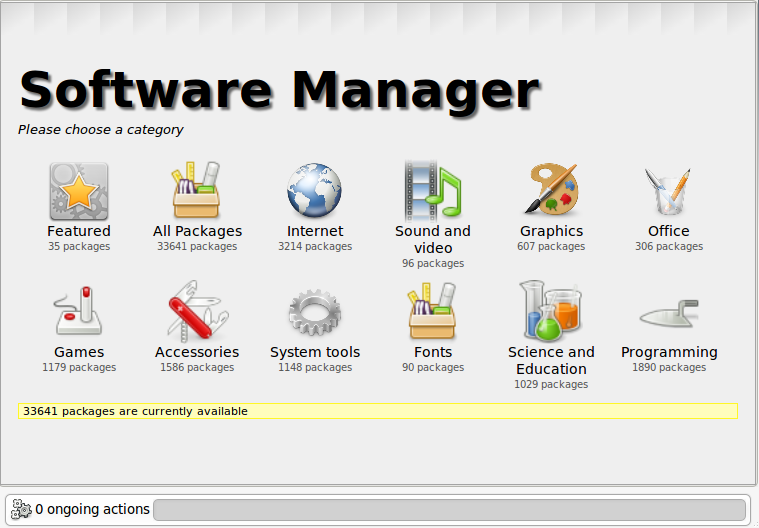



 Seriously, linux needs some apps for the folks who are stuck with apple and windows like photoshop, autocad, matlab etc. Alternatives wont' change a thing for them because they don't want to use any app other than industry hyped apps.


