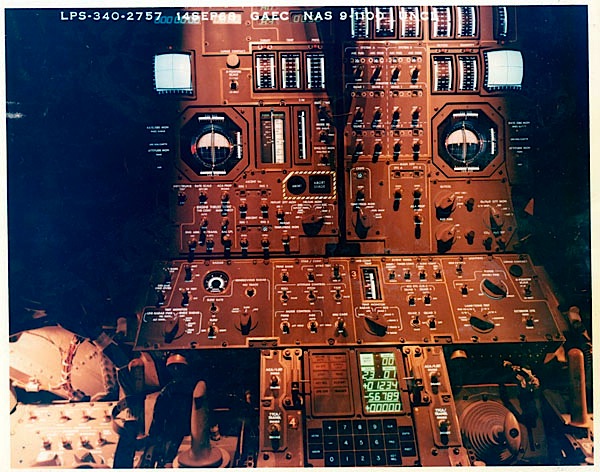
It's often been said: It ain't what ya got. It's how you use it that counts. I don't think there's ever been a better example of that than the onboard guidance computer used on the Apollo moon missions.
Think your aging Pentium laptop is too slow to get any real work done? Read on:
http://www.downloadsquad.com/2009/07/20/how-powerful-was-the-apollo-11-computer/
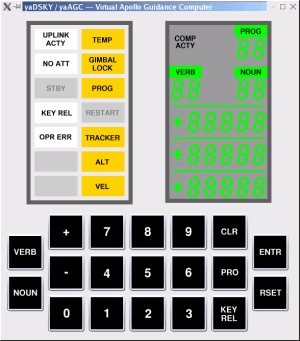
And if you're an ubergeek, you can download a working simulator of the Apollo Guidance Computer to get a feel for what it was like to use a bleeding edge real-time computer - back in 1969.
Link: http://www.ibiblio.org/apollo/index.html#What_Is_An_AGC_
[attach]
Think your aging Pentium laptop is too slow to get any real work done? Read on:
http://www.downloadsquad.com/2009/07/20/how-powerful-was-the-apollo-11-computer/
Quote
How powerful was the Apollo 11 computer?
by Grant Robertson Jul 20th 2009 at 8:30PM
With all the buzz about the 40th anniversary of the Apollo 11 Moon landing I got to thinking, how powerful were the computers that "took us to the Moon?" It turns out, they were nothing short of amazing. If you've never had a nerdy bone in your body, feel free to skip this post. But, if you ever laid on your back under the stars and thought about Mercury, Gemini, Apollo or the Space Shuttle, read on and see if you're as geek-struck as I was researching this.
And if you're an ubergeek, you can download a working simulator of the Apollo Guidance Computer to get a feel for what it was like to use a bleeding edge real-time computer - back in 1969.
Quote
Virtual AGC and AGS
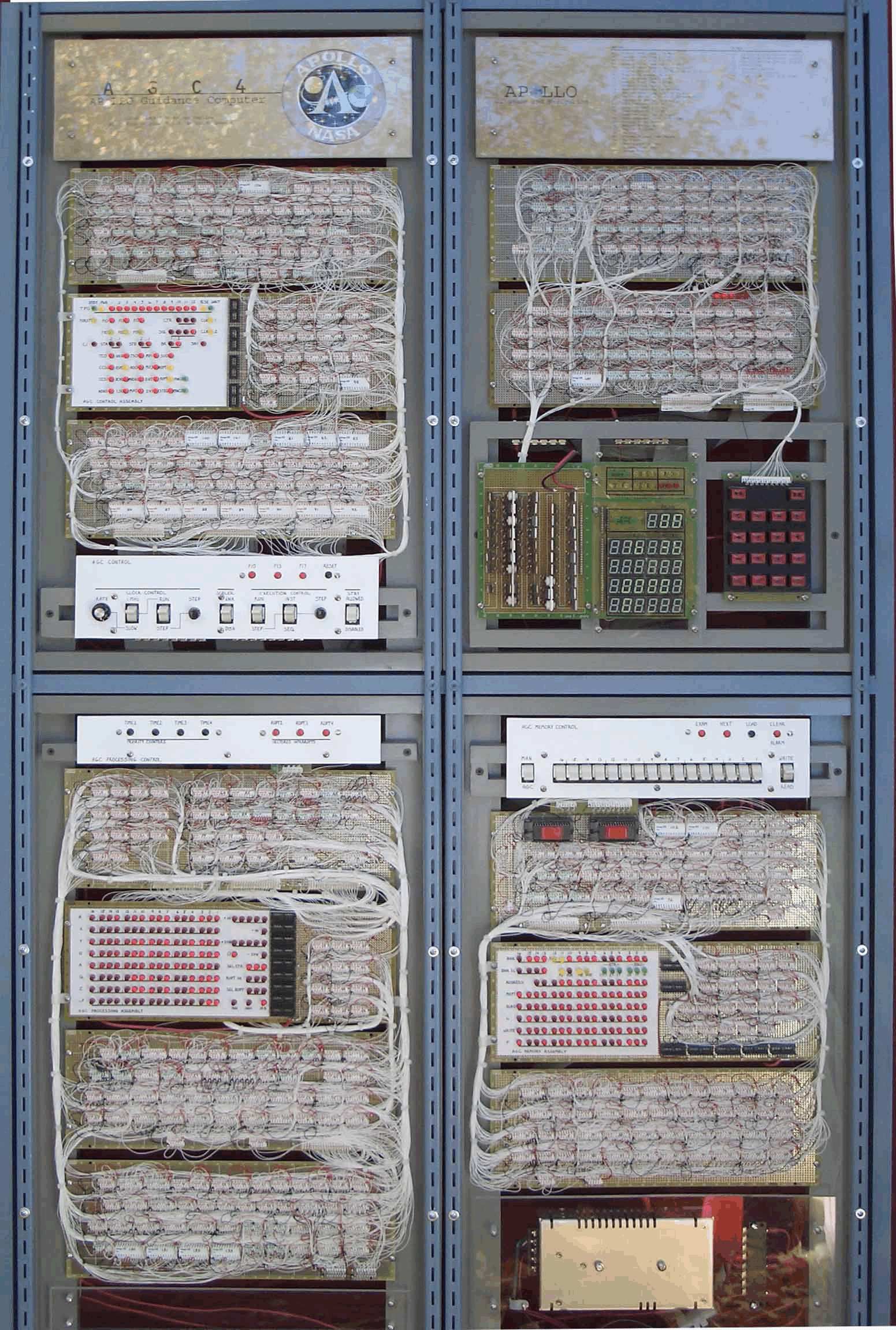
The purpose of this project is to provide a computer simulation of the onboard guidance computers used in the Apollo Program's lunar missions, and to generally allow you to learn about these guidance computers.
Link: http://www.ibiblio.org/apollo/index.html#What_Is_An_AGC_
[attach]




 - carpe noctem