[nod to Steven J. Vaughan-Nichols]
[attach]
[attach]


 Topic: Programs you can use during a financial meltdown! (Read 38,715 times)


[VideoInPicture]: However, for office programs, I would still pay for Microsoft Office 2007 simply because I think the ribbon interface is vastly superior to what's on offer from the open source community.


 It was the last version that allowed it.


 )

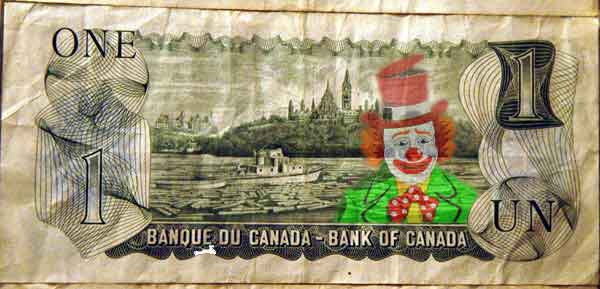
Hey, make sure you get an old copy of Adobe Photoshop 6 if you're needing to print money!

Or maybe when you just don't have any money to spend on software because you need to buy groceries, or pay the rent this month...


One of the criticisms of free software is that certain classes of applications are missing. Interestingly, the FSF agrees, up to a point, and has put together what it calls its high-priority projects list:
1. Gnash — the free software Flash player
2. Coreboot — the campaign for a free BIOS
3. Free software replacement for Skype
4. Membership and donor transaction and contact system
5. Free software video editing software
6. Free Google Earth Replacement
7. gNewSense — The all free software GNU/Linux operating system
8. GNU Octave — free software Matlab replacement
9. Replacement for OpenDWG libraries
10. Reversible Debugging in GDB
11. Free software drivers for network routers


Okay, I don't get this. I don't know about all of the software mentioned in this list, but Adobe Flash player is free, Skype is free (with subscription option), and Google Earth is also free (with subscription/Pro option).
Also, I never paid anything for my BIOS firmware or router drivers.
Or am I missing something?
Free software is software that gives you the user the freedom to share, study and modify it. We call this free software because the user is free.
To use free software is to make a political and ethical choice asserting the right to learn, and share what we learn with others. Free software has become the foundation of a learning society where we share our knowledge in a way that others can build upon and enjoy.
) between something that's really "free" as opposed to just "available at no charge." 

Lots of FLOSS is really dross.....

QuoteFree software is software that gives you the user the freedom to share, study and modify it. We call this free software because the user is free.
I'm not sure that FLOSS is automatically better.
Lots of FLOSS is really dross, and a lot is not well maintained. Big "commercial" enterprises tend to be needed to maintain large and very complex apps (and I do include the 'not for profit' OSS groups here) and most of the apps I really like are developed and maintained by one (or a very small team) of programmers - and many of them like to keep control by maintaining ownership of their code even when they are committed to keeping everything free.


The Free Software Foundation's definition of "free" goes beyond being free of charge. To be considered "free" in the FSF universe, a product would have to be released under GPL. Any licensing restrictions would make it "not free" even if it were otherwise given away.
The Free Software Foundation's definition of "free" goes beyond being free of charge. To be considered "free" in the FSF universe, a product would have to be released under GPL. Any licensing restrictions would make it "not free" even if it were otherwise given away.
It's a bit like saying I'll buy you a drink but the drink isn't free unless I provide you with the keys to the brewery.
FSF approach is just plain stupid (IMHO).
FSF approach is just plain stupid (IMHO).


Original address: https://www.donationcoder.com/forum/index.php?topic=15201.0