


I've recently caught a little bit of a cooking bug.
But as enjoyable as the cooking is, i'm more of a reader than a do-er, and i'm really truly loving reading Christopher Kimball's books. Basically he takes an experimentalist/scientific approach to these things.
He analyzes and compares ingredient/temperature/method variations as if he was looking for the cure to pneumonia. It's really fun to read about him analyzing minuscule changes and the effects they have. You also learn a ton about why recipes tell you to do different things. Very fun reading.. I almost feel like i don't have to do the cooking after reading him talk about it.
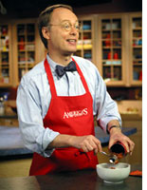
But as enjoyable as the cooking is, i'm more of a reader than a do-er, and i'm really truly loving reading Christopher Kimball's books. Basically he takes an experimentalist/scientific approach to these things.
He analyzes and compares ingredient/temperature/method variations as if he was looking for the cure to pneumonia. It's really fun to read about him analyzing minuscule changes and the effects they have. You also learn a ton about why recipes tell you to do different things. Very fun reading.. I almost feel like i don't have to do the cooking after reading him talk about it.
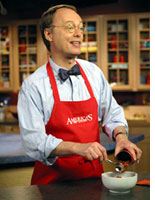
- His books on Amazon.com: http://www.amazon.com/s?url=search-alias%3Dstripbooks&field-keywords=christopher+kimball&x=0&y=0
- America's Test Kitchen TV show: http://www.americastestkitchen.com/
- Sexy Food Nerds article about him: http://slate.com/id/2089461/


 )and we talked about subsequently; I think the title was something like "molecular cooking", they basically identified the exact temperatures needed to start the chemical/molecular changes, like doing long-time low-heat cooking of meat, followed by a very short ultra-hot fry to kill the bacteria on the outside of the meat (obviously this kind of cooking is not good for minced meat!).
 - carpe noctem
